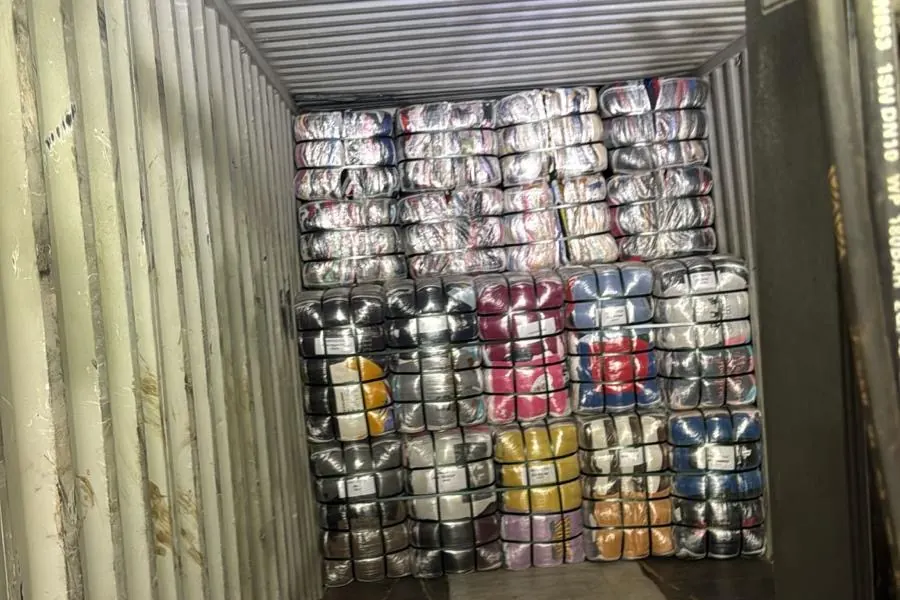
1. Container sizes and how much clothing fits
Used clothing travels in pressed, strapped bales. How many bales fit depends on the bale weight, the categories (denim and winter wear are heavier) and how hard the bales are pressed — so any figure is a range, and the exact weight of your load is written in the proforma and the packing list.
Other exporters publish figures such as 260 bales of 55 kg or 300 bales of 45 kg in a 20 ft container, and about 25 tonnes or 580–600 bales in a 40 ft High Cube (see sources).
| Container | ISO type | Typical internal size | Volume |
|---|---|---|---|
| 20 ft | 22G1 | 5.90 × 2.35 × 2.39 m | ≈ 33 m³ |
| 40 ft | 42G1 | 12.03 × 2.35 × 2.39 m | ≈ 67 m³ |
| 40 ft High Cube | 45G1 | 12.03 × 2.35 × 2.70 m | ≈ 76 m³ |
2. Grades and composition
Sorted European clothing is usually sold by quality grade: cream (the best pieces), first quality and second quality, while unsorted collection goods are called “original”. Grade names are not standardised between suppliers, so ask for the definition in writing.
Our priority grade is second quality (grade 2). You can ask for a mixed load or a composition focused on the categories your market sells — men's, women's, children's clothing, denim, footwear, bags or household textiles — and we confirm availability and the final shares in the written offer.
3. Check your country's rules before you order
Used clothing is legal to import in most African markets, but several countries ban specific items or apply heavy duties. Check with your clearing agent before you commit:
- Used underwear is banned in many markets — for example Ghana (LI 1586) and the East African Community; Zambia also bans used sleepwear.
- Kenya requires KEBS registration, a Certificate of Conformity (PVoC), fumigation before baling, clear packaging and one category per bale.
- Cameroon asks for a disinfection or fumigation certificate for used textiles.
- Uganda adds a 30 % levy (2026) to a 35 % duty and 18 % VAT; Rwanda charges US$2.50 per kg.
- Senegal confirmed in December 2024 that used-clothing imports are not banned.
- Nigeria lists second-hand clothing among prohibited imports, so we do not quote for Nigeria.
4. Documents for each shipment
A standard export file includes the bill of lading, the commercial invoice, a packing list per bale, the export customs declaration and the verified gross mass (VGM). Depending on the destination you may also need a certificate of origin, a fumigation certificate, an inspection certificate or a cargo tracking note issued before loading.
| Country | Cargo tracking note |
|---|---|
| Benin, Cameroon, Togo, Guinea, Mali, Burundi | BESC |
| Côte d'Ivoire, Senegal, Madagascar | BSC |
| DR Congo | FERI |
| Republic of the Congo | ECTN |
| Gabon | BIETC |
| Angola | ARCCLA |
5. Incoterms: who pays the freight
FOB: you book and pay the sea freight from the Spanish port. CFR: we pay the freight to your port and the risk passes to you once the container is on board. CIF: as CFR plus minimum marine insurance. The Incoterm (ICC Incoterms® 2020) is written in the offer; FCA, CPT or CIP can be requested for containers.
6. Reuse, not waste: the EU rules
The EU Waste Shipment Regulation (EU) 2024/1157 limits exports of waste to non-OECD countries from 21 May 2027, and Directive (EU) 2025/1892 defines the evidence that textiles shipped for reuse are not waste. Sorted clothing for reuse is not waste, but it has to be documented as such: invoice and contract, sorting records and a declaration that the load contains no waste. Buying from a supplier who sorts and documents the load protects your shipment at the European port.
7. Check your load before paying the balance
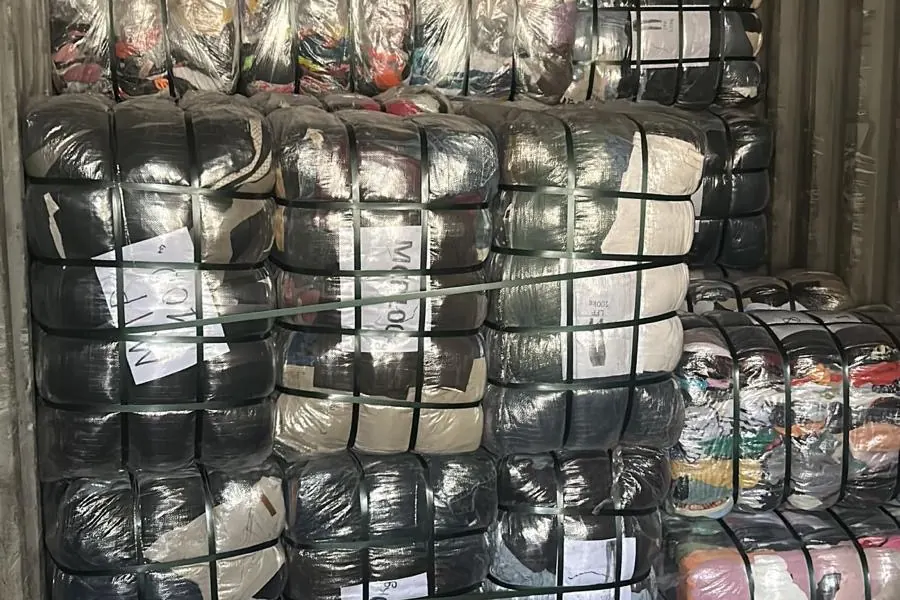
You buy a container you will not see until it arrives, so ask for proof during loading:
- photos and video of the container being loaded, layer by layer;
- two or three bales opened at random on camera;
- a photo of the container number and the seal, matching the bill of lading;
- the packing list with the category, grade and weight of every bale;
- the B/L number to track the container on the carrier's website.
8. Step by step
- 1Choose your destination port and confirm the import rules with your clearing agent.
- 2Choose the container type and the composition (or let us recommend one).
- 3Receive a written offer: grade, composition, weight, Incoterm, documents and payment terms.
- 4Agree the terms; we prepare the load and the documents your country needs.
- 5Loading with photo and video proof; the container is sealed and shipped.
- 6You receive the documents and clear the goods with your agent.
Frequently asked questions
How many bales fit in a 40 ft container of used clothing?
It depends on bale weight, categories and pressing. Exporters publish figures of about 25 tonnes or 580–600 bales of 45 kg in a 40 ft High Cube. The exact count and weight of your load are written in the packing list.
How many tonnes are in a 20 ft container of used clothing?
Suppliers report figures such as 260 bales of 55 kg or 300 bales of 45 kg (about 13–14 tonnes). Heavier categories such as denim weigh more per bale.
Which documents do I need to import used clothing?
Usually the bill of lading, commercial invoice, packing list per bale and certificate of origin, plus — depending on the country — a fumigation certificate, an inspection certificate (for example PVoC in Kenya) or a cargo tracking note such as BESC, BSC, FERI or ECTN.
Is it legal to import used clothing into my country?
In most African markets yes, with duties and some banned items (often used underwear). Nigeria prohibits second-hand clothing imports. Always confirm the current rules with your clearing agent; our destination map lists what we know per port, with sources.
What does grade 2 (second quality) mean?
Sorted clothing in good, wearable condition that is not in the top selection (cream or first quality). Grade definitions differ between suppliers, so ask for the definition in writing with your offer.
How can I check the container before paying?
Ask for loading photos and video, bales opened at random on camera, the container and seal numbers matching the bill of lading, and a packing list per bale.
Sources
- Recyclage Textile SRCE — Friperie en gros à l'export (bales per 20 ft container)
- GH Textile — Export of used clothing (40 ft HC: 25 t / 580–600 bales)
- GetCTN — Countries requiring a cargo tracking note (24 Feb 2026)
- Cotecna — Kenya importation protocols for used textiles and shoes (12 May 2021)
- Ghana News Agency — GSA to enforce ban on second-hand undergarments (27 Jul 2023)
- GTAI — Cameroon: product safety, standards and technical rules (fumigation certificate for used textiles)
- U.S. Commercial Service — Nigeria prohibited and restricted imports (6 Jun 2023)
- The Star / BBC — East Africa wants to curb mitumba imports but it's not easy (24 May 2026)
- APA News — Senegal: second-hand clothing imports are not banned (16 Dec 2024)
- European Commission — Waste Shipment Regulation (EU) 2024/1157
- ICC — Incoterms® 2020