Uganda
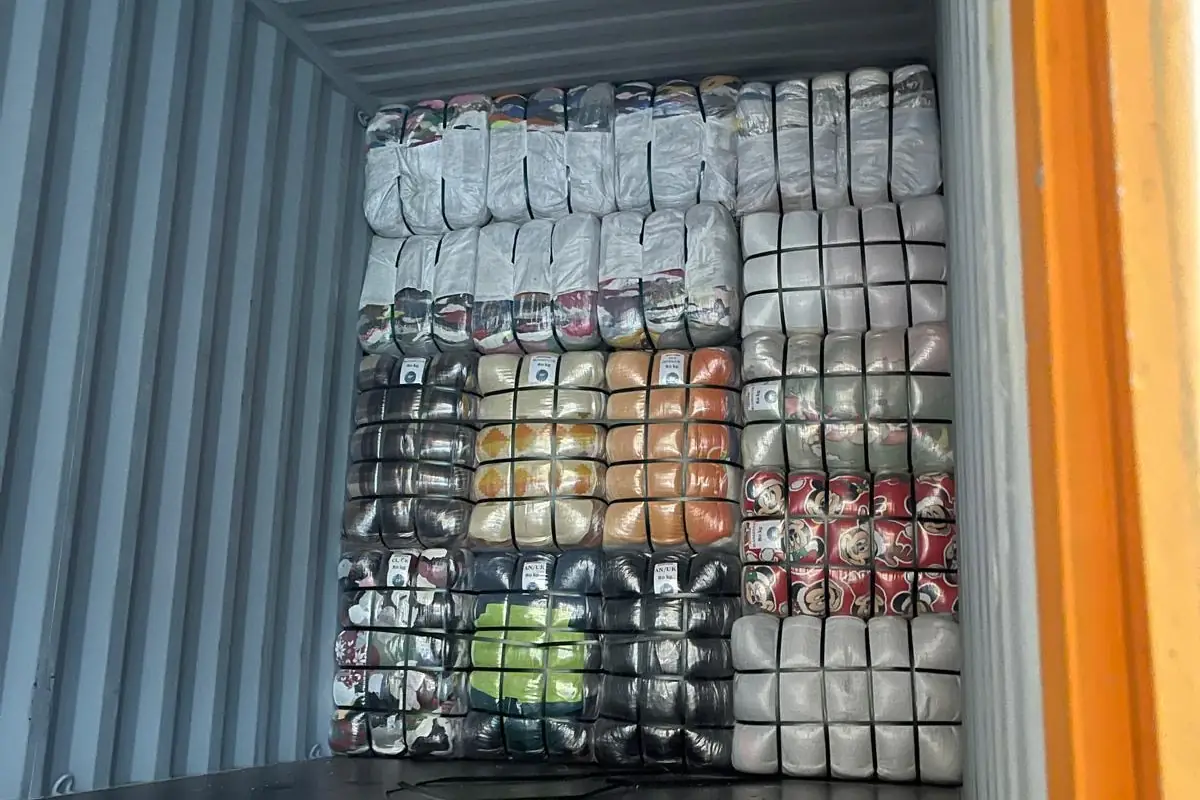
Used clothing bales for importers in Uganda
Uganda is landlocked: containers of second-hand clothing travel through Mombasa or Dar es Salaam and continue by road. Wholesale buyers in Kampala can describe the categories, grades and volumes they need and the corridor they prefer.
Ports and routing
Landlocked: shipped through a coastal gateway
Uganda has no sea port. The container is shipped to a coastal gateway and continues by road or rail with your clearing agent.
Usual gateway ports
See on the destination map →Tell us your transit port (Mombasa or Dar es Salaam) and whether you arrange inland transport yourself; this decides the Incoterm and the documents.
Documents for Uganda
The standard export file for each container, plus what this destination is known to require. The final list is confirmed with your offer.
- Bill of lading (B/L)
- Commercial invoice
- Packing list per bale
- Certificate of origin
- Fumigation or disinfection certificate
- Verified gross mass (VGM)
Import rules to check
Worn clothing pays a 35 % import duty and 18 % VAT, plus a 30 % levy introduced in 2026 (reported May 2026). A ban announced in 2023 was not implemented. Uganda runs a pre-export verification of conformity (PVoC) programme through UNBS, and the EAC customs law prohibits previously used underwear. Check the current position with your clearing agent and UNBS before ordering.
This information is for orientation only. Import rules change; confirm current requirements with the competent authority and your clearing agent before ordering.
Local terminology
Mitumba (second-hand clothes).
Sources
- The Star / BBC — East Africa wants to curb mitumba imports but it's not easy (24 May 2026) — accessed 2026-10-25
- TÜV Rheinland — Uganda PVoC (EAC prohibition on previously used underwear) — accessed 2026-10-25