Malawi
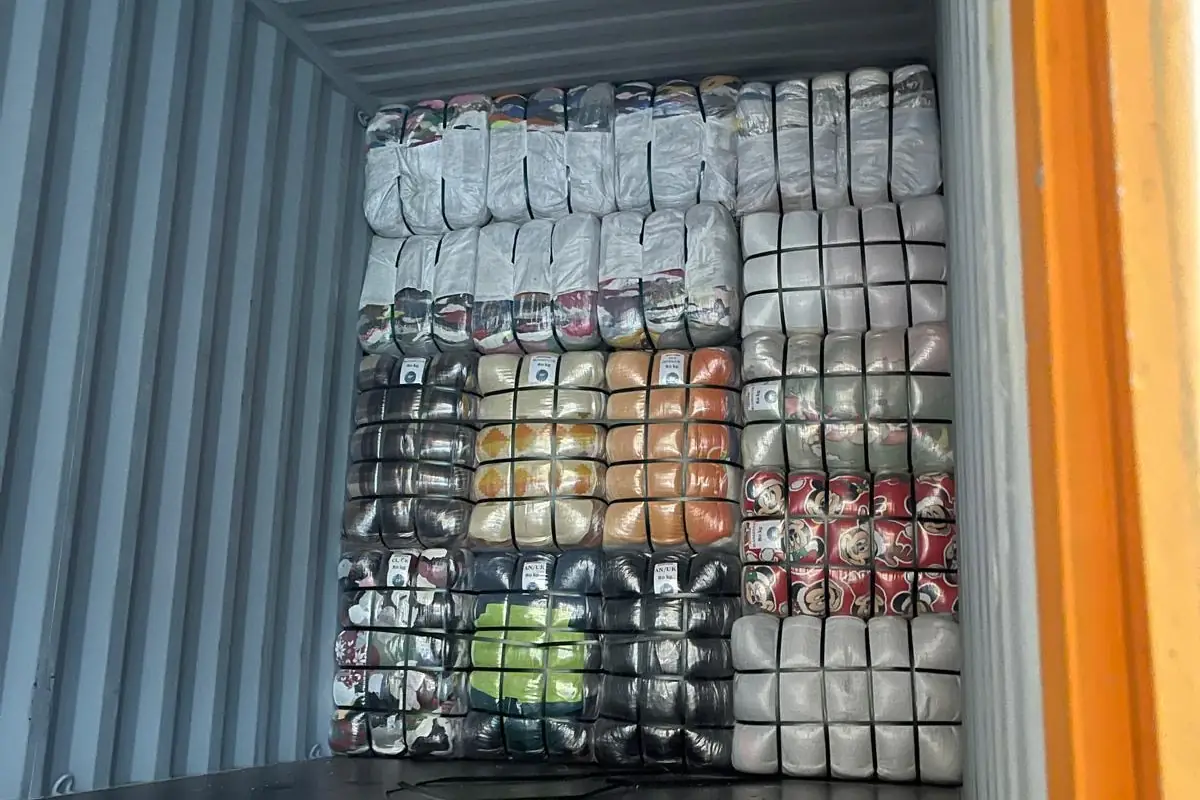
Used clothing bales for importers in Malawi
Malawi is one of Africa's largest buyers of second-hand clothing: about 56,000 tonnes imported in 2023, worth US$99 million (UN Comtrade). Tell us your categories, grade and container, and we reply with a written offer.
Ports and routing
Landlocked: shipped through a coastal gateway
Malawi has no sea port. The container is shipped to a coastal gateway and continues by road or rail with your clearing agent.
Usual gateway ports
See on the destination map →Malawi has no sea port. Loads are shipped to a coastal gateway — usually Beira (Mozambique) or Dar es Salaam (Tanzania) — and continue by road, arranged by your clearing agent. Tell us the gateway you use, your Incoterm (FOB, CFR or CIF to the port) and your clearing agent.
Documents for Malawi
The standard export file for each container, plus what this destination is known to require. The final list is confirmed with your offer.
- Bill of lading (B/L)
- Commercial invoice
- Packing list per bale
- Certificate of origin
- Fumigation or disinfection certificate
- Verified gross mass (VGM)
Import rules to check
Second-hand clothes above one bale need an import permit from the Ministry of Industry and Trade (valid for six months, renewable), and used underwear, including pants and bras, may not be imported (U.S. Commercial Service, June 2026). These items are excluded from every load. In March 2024 the Malawi Revenue Authority withdrew a planned increase and kept the customs value of used clothing at US$1.90 per kg. Confirm current requirements with your clearing agent.
This information is for orientation only. Import rules change; confirm current requirements with the competent authority and your clearing agent before ordering.
Local terminology
Kaunjika (second-hand clothes). Bales are usually described by category, weight and grade.
Sources
- WITS / UN Comtrade — imports of worn clothing (HS 630900), 2023 — accessed 2026-10-25
- U.S. Commercial Service — Malawi: prohibited and restricted imports (8 Jun 2026) — accessed 2026-10-25
- The Nation (Malawi) — MRA reverses kaunjika tax (21 Mar 2024) — accessed 2026-10-25